Owner outreachKnow, check, reportMake official guidance easy to scan before a suspicious wound becomes a delay.
Surveillance supportCounty-aware alertsConnect zone changes, home-county distance, reports, photos, and official links.
Computer visionComing soonPhoto uploads are hidden until the VLM review stack is ready for public intake.
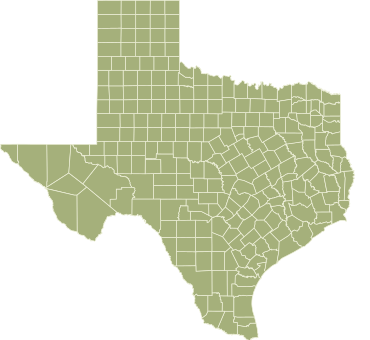
Texas Zone Map
Keep the live TAHC map one tap from the field.
TAHC's live web map is the fast geography check for Texas users. Use it to review current zone context, then confirm movement, reporting, and animal-health decisions with official guidance.
TAHC New World Screwworm ZonesDaily Texas county tile from the public TAHC zone layer.
GPS can fill your home county.
Nearest infested zoneSelect county
Current Briefing
What changed, why it matters, and where to verify it.
A launch feed of cited updates. The awareness desk is designed to bring together government alerts, extension guidance, farm press, local news, broadcast clips, and field reports in one readable place.
June 13, 2026
Case-count stories and pet-treatment news are driving public attention
TopHand's public news scan found strong attention around U.S. case-count updates, local coverage of additional Texas cases, and FDA's emergency authorization for a pet treatment option.
Emergency authorization issued for nitenpyram treatment in dogs and cats
FDA issued an EUA for generic nitenpyram tablets to treat New World screwworm myiasis in dogs, puppies, cats, and kittens meeting age and weight criteria. USDA framed most U.S. pets as low risk unless they were recently in confirmed-case areas.
Official status page updated with reporting guidance and current response links
USDA's current-status hub points the public to confirmed detection dashboards, reporting resources, trade restrictions, and sterile-insect response updates. It says suspicious wounds, maggots, or infestations should be reported immediately.
USDA reported a sixth U.S. case and emphasized early detection
APHIS confirmed a La Salle County calf case and described joint state-federal response work: case tracing, surveillance, testing, trapping, sterile insect release adjustments, and outreach. USDA also stated that the U.S. food supply remains safe.
Sid Miller renewed calls for immediate SWASS deployment
Commissioner Sid Miller argued that sterile flies should be paired with the Screwworm Adult Suppression System. His warning line for producers was blunt: "Every day we delay" gives the pest room to spread.
CDC situation summary: low human risk in the U.S., but painful infestations need care
CDC reported no locally acquired human infestations in the United States, while noting the outbreak has moved north through Central America and Mexico since 2023 and can affect animals and people.
USDA confirmed New World screwworm in a Texas calf
APHIS confirmed the first animal case of the current U.S. outbreak in Zavala County, Texas and described immediate containment steps including a 20 km infested zone, movement controls, surveillance, and sterile-fly release.
Sterile flies, SWASS, surveillance, and the urgency argument.
Sterile insect technique
The proven backbone: release sterile males so females lay nonviable eggs. USDA says current investments aim to approach historical production levels used during eradication.
Miller is pressing for SWASS as a bridge tool to kill fertile adult flies while sterile-fly capacity ramps. USDA and other experts continue weighing modern bait, lure, and environmental constraints.
APHIS lists Pacora, Metapa, and Moore Air Base as production or dispersal nodes. Moore Air Base is listed as an operational dispersal facility and a future domestic production site.
Reduce the odds of the open wound before the fly ever arrives.
Screwworm awareness should not only be a reporting page. The practical ranch response is a daily loop: inspect animals, reduce fly pressure, prevent wounds, document concerns, and know exactly who to call before a suspicious case appears.
Daily wound scan
Inspect wounds, navels, ears, nose, genital area, and other openings. Watch for irritated behavior, drainage, foul odor, or visible larvae.
Treat fly and tick pressure as a wound-prevention issue. Texas A&M AgriLife recommends discussing sprays, pour-ons, dips, ear tags, and pasture monitoring with your veterinarian.
Plan extra observation around calving, shearing, branding, castration, dehorning, tagging, transport, predator injuries, and any procedure that leaves an open wound.
If a case is suspected, separate affected animals when practical, call a veterinarian, notify animal-health officials, and avoid moving animals until directed.
Walk chutes, alleys, pens, trailers, gates, latches, mineral feeders, and water points. Mark anything that could puncture, scrape, pinch, or tear skin.
Look for rough welds, pressure points, broken rubber, head-catch rub spots, protruding pins, and places animals hit when backing or lunging.
Pens, alleys, and crowd tubs
Inspect tight turns, splintered boards, pipe ends, manure slicks, exposed wire, and corners where animals pile up or scrape shoulders and hips.
Trailers and ramps
Check ramp cleats, floor rot, gate gaps, sharp thresholds, divider hardware, and places animals can catch legs or tear hide during loading.
Fences, gates, and latches
Find loose panels, wire tails, bent T-post clips, old barbed wire, hinge pinch points, nail heads, and latch hardware at animal height.
Water, feed, and mineral sites
Look at rub edges, loose tin, broken troughs, hay-ring burrs, feeder bolts, and muddy footing where cattle crowd daily.
Pasture objects and debris
Remove junk iron, low limbs, broken equipment, scrap wire, old panels, and storm debris before they become wound sources.
What To Look For
Visual field cues for owners, veterinarians, and first calls.
USDA says the most important thing animal owners can do is know what to look for and how to report suspected cases. Use these cards as a quick second-look guide, then contact a veterinarian, state animal health official, or USDA if a case is suspicious.
Actual reference photo
Draining or enlarging wounds
Treat a wound that is getting wider, deeper, wetter, swollen, bloody, painful, or foul-smelling as an urgent second-look case.
Suspect a case?Call a veterinarian, state animal health official, or USDA immediately. Though rare in people, anyone with a suspicious lesion should seek immediate medical care.Report suspected cases
Eradication History
Decades ago, the breakthrough was biological: stop reproduction.
The sterile insect technique worked because female New World screwworm flies mate once. If enough sterile males mate with wild females, eggs fail to hatch and the population collapses generation by generation.
1930s
Species clarity and mass-rearing breakthroughs
USDA researchers established the New World screwworm as distinct from blowflies that feed on dead matter, then developed ways to rear large numbers for research.
Photo analysis is being prepared before public intake.
The public launch focuses on awareness, official reporting pathways, zone-map access, and readiness guidance. Uploads will open after provider routing, safety language, storage, and review prompts are ready.
We are preparing the computer-vision wound review before public intake. For now, use the visual guidance on this page and report suspected cases through official channels immediately.
Public upload intake disabledReview prompts and provider routing in progressOfficial reporting links remain available now
Facility Photo Audit - Coming Soon
Facility image review is part of the next public phase.
The checklist and wound-prevention map are live now. Photo-based facility risk review will stay hidden until the model workflow is ready for public use.
We are preparing the computer-vision facility review before public intake. For now, use the readiness checklist and inspect handling areas directly before high-risk work.
Public upload intake disabledReview prompts and provider routing in progressOfficial reporting links remain available now
Public Tooling Roadmap
Make the method usable by ranchers, researchers, and builders.
Clear photo-review checklists
Publish plain-language checklists for wound photos, larvae signs, body-site context, and facility hazards so users know what the review is looking for.
Private photo records
Help users keep dated wound, animal, and repair photos organized without exposing producer identity or turning private reports into public posts.
Better second-look review
Prepare future photo review with more known examples, more negative examples, and clearer confidence ranges as the reference library grows.
Community alert desk
Bring official updates, local news, agriculture blogs, broadcasts, and field reports into one readable awareness feed.
Source Radar
Coverage lanes for a full TopHand intelligence feed.
Government
USDA APHIS, CDC, FDA, TDA, TAHC, state animal-health offices, COPEG, SENASICA, and disaster declarations.
Academic and extension
Texas A&M AgriLife, National Agricultural Library, veterinary manuals, entomology papers, and sterile-insect history.
News and blogs
Farm press, local Texas outlets, national coverage, agriculture blogs, newsletters, and producer association updates.
Broadcast and radio
YouTube, TV clips, radio interviews, podcasts, and transcripts reviewed for useful updates and quotes.
Field signals
Producer reports, submitted photos, county-level concern clusters, travel history, and official reporting redirects.
Editorial review
Every item needs a source URL, publish date, named people and places, confidence rating, quote handling, and a readable summary.
Visual References
Known images are useful, but they are not enough for a diagnosis.
These source-backed images help users learn visual cues while the computer-vision review workflow remains in preparation. They are educational references, not a diagnosis.
Adult flyPhoto by USDA via APHIS photo galleryFly and egg massPhoto by USDA via Kentucky Fish & WildlifeMature larvaePhoto by USDA via Kentucky Fish & Wildlife
Computer vision is coming soon
The first public version keeps the upload workflow closed while the VLM review, storage, and safety language are finished.
What comes next
Add recurring ingestion for APHIS, CDC, TDA, academic alerts, RSS, YouTube transcripts, radio transcripts, readiness articles, field reports, and public photo-review guidance.